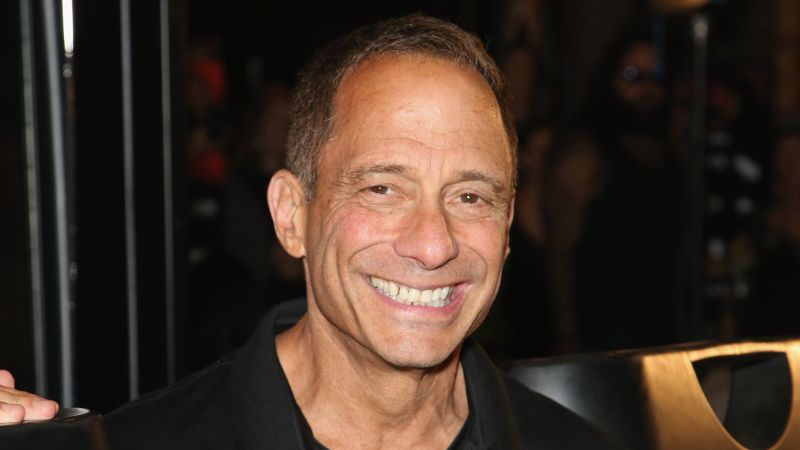
TMZ's Harvey Levin: Breaking Celebrity News, Defying Critics
In the high-stakes world of celebrity news, few names evoke as much discussion, admiration, and controversy as Harvey Levin. The mastermind behind TMZ, Levin has irrevocably altered the landscape of entertainment journalism, transforming it from a carefully curated public relations spectacle into a relentless pursuit of unfiltered truth – or at least, a raw, unvarnished version of it. From his beginnings as a sharp legal mind to his current status as a media mogul, Levin’s journey is a testament to an unwavering vision and an unapologetic approach to uncovering the stories Hollywood often tries to keep hidden.
From Courtroom to Camera: The Making of a Media Mogul
Before becoming synonymous with breaking celebrity scandals, Harvey Levin built a formidable career rooted in law and rigorous investigative reporting. A distinguished graduate of the University of Chicago Law School, Levin initially embarked on a path as a litigator at a prestigious Los Angeles law firm. His intellect and incisive analytical skills quickly became apparent, leading him to not only practice law but also to teach it, serving as a professor at three different universities. He even lent his legal expertise as a consultant for the American Bar Association, testifying before Congress on behalf of the organization. This profound legal background laid a crucial foundation for his future endeavors, instilling a deep understanding of evidence, cross-examination, and the pursuit of facts.
Levin’s transition into media began with a natural gravitation towards legal journalism. For a decade, he honed his skills as an investigative reporter for KCBS-TV in Los Angeles, covering numerous high-profile court cases that captivated the nation. His reporting prowess extended to top CBS stations across the country, including affiliates in New York and Chicago. He further solidified his journalistic credentials as a legal columnist for the Los Angeles Times for seven years and hosted popular radio talk shows for KABC-AM and KMPC-AM in Los Angeles. This diverse experience across print, radio, and television news cemented his reputation as a tenacious reporter with a knack for unpacking complex legal and human interest stories. For a deeper dive into his diverse professional journey, explore From Lawyer to Media Mogul: Harvey Levin's Diverse Career Path.
His pre-TMZ television career saw him take on significant roles as Co-Executive Producer and consultant for the long-running syndicated series “The People’s Court,” where he continues to host the interactive segments. He also served as Executive Consultant on “Moral Court” and Managing Editor of “Superior Court.” These roles showcased his ability to translate legal complexities into engaging television content. The pivotal precursor to TMZ, however, was his creation and executive production of the syndicated series “Celebrity Justice,” which provided a unique lens through which to examine legal issues involving public figures. This impressive track record, marked by nine Emmy® Awards and numerous other accolades for news and investigative reporting, demonstrated Levin's commitment to high-quality journalism long before TMZ became a household name.
TMZ's Unconventional Ascent: Breaking the Mold of Celebrity Reporting
In 2005, Harvey Levin launched TMZ, a platform that would redefine celebrity journalism. TMZ didn't just report news; it made news, often setting the agenda for major media outlets. Its revolutionary approach was simple yet disruptive: instead of waiting for publicists' carefully crafted press releases or relying on controlled interviews, TMZ went directly to the source. This meant on-the-ground reporters, camera crews constantly scouring Los Angeles hotspots, and a network of informal sources often overlooked by traditional media.
The site's rapid-fire delivery of stories, often accompanied by candid paparazzi photos and amateur video footage, created an unparalleled sense of immediacy. TMZ embraced the digital age, understanding that news, especially celebrity news, moves fast. Their model was built on being first, often at the expense of traditional gatekeepers. This approach led to an astonishing string of exclusives that sent shockwaves through Hollywood and beyond. Who can forget the infamous Mel Gibson anti-Semitic rants that TMZ broke, exposing a darker side of the actor? Or the disturbing Ray Rice elevator video, which ignited a national conversation about domestic violence and accountability? Perhaps one of their most impactful stories was the exposure of Donald Sterling's racist rants, which ultimately led to his forced sale of the Los Angeles Clippers, demonstrating TMZ's power to affect real-world change.
These stories, among many others, highlighted TMZ’s ability to pierce through the carefully constructed façades of celebrity, revealing moments of vulnerability, anger, and undeniable truth. Their success wasn't just about sensationalism; it was about demonstrating that celebrity news could be sourced differently, often from the very people (bartenders, hospital orderlies, hotel maids) who were privy to behind-the-scenes moments. This methodology challenged the symbiotic relationship between publicists and traditional journalists, forcing the industry to adapt to a new, more aggressive form of reporting.
The Ethics of Access: Paid Sources and Unfiltered Truths
TMZ's revolutionary success, however, came with significant ethical questions, primarily centered around its controversial practice of paying sources for information. This aspect of Harvey Levin's empire has been a constant subject of scrutiny, as highlighted by publications like The New Yorker, which reminded readers just how important – and intimidating – Levin's media empire had become. While major media outlets publicly condemn the practice of paying for stories, often citing concerns about veracity and journalistic integrity, TMZ has reportedly paid as much as six figures to its "sleazy sources," as some critics describe them.
This ethical dilemma pits the pursuit of truth against the perceived purity of journalistic methods. Critics argue that paying sources incentivizes fabricated stories or exaggerations, compromising the fundamental trust in reporting. Yet, as the references point out, this controversial method has undeniably led to the breaking of monumental stories that traditional, non-paying outlets might never have obtained. From Donald Sterling's private negotiations with girlfriends to other culturally significant moments, these exclusives have had profound impacts, sparking public discourse and even leading to significant consequences for the celebrities involved.
Levin himself remains unapologetic, famously proclaiming, "most journalism about stars is built on a lie." This bold statement encapsulates his philosophy: if the traditional system is inherently flawed, built on carefully managed narratives and publicist spin, then an unconventional approach is necessary to uncover what he believes to be the genuine story. This stance has garnered him what journalist Mike Fleming Jr. describes as "grudging admiration." Fleming acknowledges Levin's skill in "meld[ing] dogged journalism with under the table payments" to create a highly profitable business model. It's a pragmatic, if ethically thorny, approach that recognizes the demand for raw celebrity insight and is willing to pay the price – both financial and reputational – to deliver it. To understand more about this unique operational strategy, read Harvey Levin's TMZ: Unpacking The Empire of Paid Sources.
Navigating the Grey Areas of Celebrity Journalism
The debate surrounding TMZ's ethics isn't just about financial transactions; it's about the shifting power dynamics in celebrity culture. By empowering "sources" outside the traditional media bubble – from hotel staff to airport employees – TMZ gave a voice (and a paycheck) to individuals who were previously ignored. This created a new ecosystem where privacy became an increasingly rare commodity for public figures. While many found this invasive, Levin's defenders argue that he simply capitalized on a societal appetite for authenticity, challenging the carefully constructed walls publicists had built around their celebrity clients. He forced a conversation about what "public" means for public figures and whether the public has a "right to know" about their less-than-glamorous moments. This "dirty money for truth" trade-off, as some might characterize it, remains one of the most contentious yet effective elements of Harvey Levin's enduring influence.
Beyond the Headlines: Harvey Levin's Enduring Influence
Regardless of one's stance on his methods, Harvey Levin's impact on the entertainment news landscape is undeniable and enduring. He didn't just create a website; he spearheaded a cultural shift. TMZ became a template for how celebrity news could be gathered and consumed – fast, visual, and often startlingly immediate. Its success spawned numerous imitators, all attempting to replicate the blend of relentless pursuit and rapid dissemination that became TMZ's hallmark.
Levin's unapologetic commitment to his brand of journalism, even in the face of widespread criticism, underscores a deeply held conviction that the public deserves a glimpse beyond the carefully curated images presented by celebrity public relations machines. He has, in essence, democratized access to celebrity information, moving it from exclusive interview rooms to the streets and private moments caught on camera. His significant prior achievements, including numerous Emmy® Awards for traditional investigative reporting, often get overshadowed by TMZ's controversies, but they serve as a reminder that his foundation is in serious journalism.
In conclusion, Harvey Levin is more than just a media personality; he is a disruptor who, leveraging a formidable legal background and an unyielding journalistic drive, built an empire on breaking news and defying critics. TMZ, under his guidance, has irrevocably changed how we consume celebrity news, forcing us to confront uncomfortable truths about privacy, ethics, and the public's insatiable curiosity. Love him or loathe him, Harvey Levin has left an indelible mark on modern media, solidifying his place as a pioneering, albeit polarizing, figure in the ongoing saga of celebrity culture.